When to see a physio vs a vet for your dog.
If your dog is limping, slowing down, or struggling to get around, it can be difficult to know who should be your first call. Should you book with your veterinarian? Should you see a canine physio? The answer depends on what's happening—but the good news is these professions aren't competing. They each bring different expertise and often work best together.
The Vet.
Veterinarians, or DVMS, are the medical experts when it comes to animals, your dog included. Veterinarians are trained to diagnose medical conditions and identify the underlying disease or injury responsible for your dog's symptoms. They can order bloodwork, imaging, refer to other veterinary specialists and prescribe medications.
It is advisable to see your vet first for any of the following:
Significant pain (i.e. vocalisation, refusing to weight bear, unwillingness to allow touch)
Loss of bladder/bowel control
Neurological signs (such as paralysis or dragging legs)
Acute trauma (car accident, bite wounds, etc)
Major change in behaviour
Illness or difficulty breathing
The Physio or Rehab Professional.
Physiotherapists and canine rehab therapists are best suited to help your dog with any movement related issues. We are taught through our education to assess for abnormal movement patterns, muscle imbalances and joint issues. We cannot (and should not) be providing medical diagnoses (such as issues related to the heart or lungs). We are very adept at identifying musculoskeletal issues such as muscle strains, ligament injuries, weaknesses or poor body mechanics.
Canine physios are best suited to handle the following:
Ongoing lameness despite appropriate medical treatment
General weakness
Regaining mobility and strength following neurological injuries, joint surgeries, etc.
Helping manage mobility, strength and function in dogs living with chronic conditions such as arthritis.
Non-surgical (aka. Conservative management) of joint issues such as cruciate ligament tears, hip and elbow dysplasia, luxating patella
Supportive devices such as wheelchairs/carts
Therapeutic modalities like laser therapy and PEMF
General athletic performance
Rehabilitation focuses on improving how your dog moves and functions in everyday life. That might mean helping them:
get up from the floor more easily
climb stairs safely
enjoy longer walks
rebuild muscle after surgery
regain confidence after injury
stay active as they age
Do I need to see the vet first?
Sometimes. If your dog is in significant pain, needs testing (such as an xray or bloodwork) and/or would do best with concurrent treatment, start with your veterinarian. If you are unsure of the best first step, ask us. As a registered animal physiotherapist, it is always advisable to include your primary vet in your care planning for your dog. If you are planning to use your pet insurance to cover rehab costs, you may require a referral for your claims to be covered so we recommend you check your policy.
How vet care and physio best work together.
Once your dog has a diagnosis and is medically managed by your vet, a physio can focus on non-pharmaceutical pain control and developing a plan to help your dog improve their strength, flexibility and mobility. Remember, a diagnosis ≠ recovery. It’s just the first step in guiding what comes next, which is where rehab starts.
While medications are often necessary for pain control, they cannot and do not lead to strength gains (if they did, we’d all be taking that medication!). A physio can develop a plan specific to your dogs needs and abilities to help get them back to their favourite activities again!
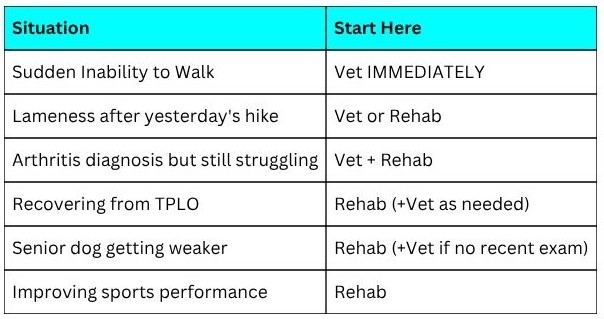
The best outcomes rarely come from one professional working alone. Veterinarians, rehabilitation professionals, and, most importantly, you as the owner each play an important role. Veterinary medicine helps identify and medically manage the problem. Rehabilitation helps your dog regain strength, confidence, and function so they can continue enjoying the life they love.